Showing posts with label Tricks are for kids. Show all posts

10.05.2010

To air brush is human

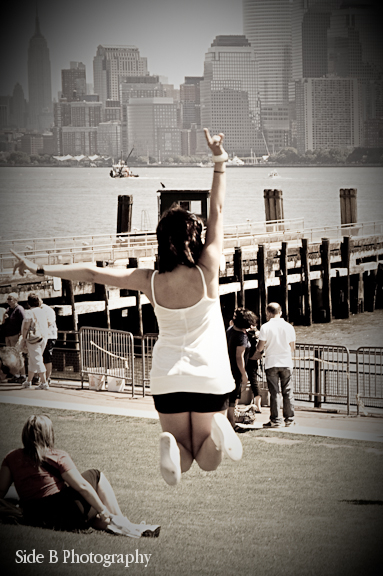
Liberty Island - 100510

I can't remember when I first heard the term air brush as part of photography.   It may have been in reference to a movie poster or Playboy photo layout.   The term had both positive and negative aspects, but either way it means it is moving toward a lie or a fiction.


According to Wikipedia -
Airbrushing has long been used to alter photographs in the pre-digital era. In skilled hands it can be used to help hide signs that an image has been extensively retouched or "doctored".

As a result of Stalin's purges, and later destalinization, many photographs of officials from the periods show extensive airbrushing, often entire people have been removed. The term "airbrushed out" has come to mean rewriting history to pretend that something was never there. In contemporary academic discourse, the process of removing components from an image is formally known as object removal.

The term "airbrushed" or "airbrushed photo" has also been used to describe glamour photos in which a model's imperfections have been removed, or in which their attributes have been enhanced. The term has often been applied in a pejorative manner to describe images of unrealistic female perfection and has been particularly common in reference to pictures in Playboy, and later Maxim. [Emphasis mine]
 That last paragraph summarizes the yin\yang of this technique.  Are we enhancing a photo or creating a lie, or both?  It depends on the intent.

The term airbrushed has faded in recent years in favor of the terms photoshop or photoshopped.

The term originates from Adobe Photoshop, the image editor most commonly used by professionals for this purpose. 
... photoshop is widely used as a verb, both colloquially and academically, to refer to retouching, compositing (or splicing), and color balancing carried out in the course of graphic design, commercial publishing, and image editing. - Wikipedia

As with airbrushing, photoshopping has both positive and negative connotations.  I always hear references to it in class.  "Oh, you can photoshop that out."  "Did you photoshop that cloud?"  "Her skin is so smooth.  How much photoshopping did that take?"

I never learned the craft of air brushing.  I am a novice in Photoshop.  I am pretty proficient in Adobe Lightroom, which enables me to smooth skin, enhance clarity, and clone out imperfections.  As I learned this application I had to set my personal aesthetic for the tool.  Here are my rules.

  1. I shall not remove or add objects.  (Telephone poles, people, tattoos, furniture, etc.)
  2. I will lightly touch up physical appearances.  (Remove pimples, rashes and other temporary blemishes.   Lighten eyes.  If smoothing skin, very little correction, if at all)
  3. I will play with saturation, color, contrast, etc as much as I want, but it will not be in a effort to cosmetically improve the subject.  It is more for mood and message.
  4. I have the right to break these rules, if, and only if, my intent is to create a fiction and note it in the artist statement for the piece or series.  The further from the truth, the greater the need to acknowledge the alteration.

One models refused to work with me because I do not smooth skin.  I do not hide age.  I do not accentuate these things either, but if they are present, they will be in my photo.  If a model can not accept their own "imperfections" then they should cover them with clothing, wear make up, or move on to another photographer.  The only times I will do heavy skin modification is in relationship to rule number 4 OR if the model or a client is paying me to take these photos and need a certain look.  In that case, they get the look they want.

Why am I a stickler on keeping it natural?  I want the world to see the natural beauty of humans, buildings, nature, etc..  If we can't acknowledge our wrinkles, acne scars (I've got them), TB shot scars, and other "imperfections" then we have little right to criticize the mass advertising world for doing the same in fashion/glamor photos.  We are all vane and want to look our best.  If you want to look your best, either hire me and direct me or move on to a photographer who will give you the photoshop botox you feel you need.  If I am creating the image for me and my art, you need to be comfortable in your own skin.  You already live in it.

You can find more of my soap box rants on this subject here.

Here is a link to a recent post at  Hear Me Roar  about the use and abuse of statistics.  It mentions anal sex...   I thought that would get your attention.

9.12.2010

The Eyes Have It

Moon - 091210

In a recent post over at What We Saw Today, How We Evaluate Ourselves, the good doctor quotes Robert Adams' Beauty in Photography.  There is one small part of the quote I feel is key to good art.
 Finally, I think the success of a work can be measured not only in its freshness and the diversity of the elements it reconciles, but also by the apparent ease of its execution.  An artwork should not appear to have been hard work.  I emphasize appear because no artwork is easy to make. - [emphasis mine]

If you are showing me your photos that you worked on or are in, you may not like my feedback.  I will tell you what works and doesn't work for me as tactfully as possible.  One area though I tend to be harsh on is the obvious overuse of tools to doctor photos.  The first place I look for these issues is in the eyes of the subject.

Back in the 1988 I took my first photography class during my undergrad years.  We learned how to develop and print black and white film.  The instructor taught us about using filters, simple tools, and other techniques to fix contrast, dark/light spots, and other issues to make our prints better.  In one photo I had a person who wore a hat on a sunny day.  Most of the detail in his face was lost in the shadow.  I tried to dodge the face to keep some detail, yet have the rest exposed for the correct time.  On the first print the face looked white and the subject had a light halo around his head.  The next try wasn't any better.  I went through so many sheets of paper trying to get the dodge down right and I never quite succeeded.  I should have used a reflector to bounce light back onto his face when I took the photo.  That experience taught me two key rules in photography.

Since then I got much better at my darkroom technique.  I also learned the golden rule of photography that applies to both digital and film - thou shalt get the image into thy camera as close to perfect as possible.  This golden rule has an auxiliary admonishment - tricks are for kids (thanks Uncle Ron, photo guru, for that quote)This auxiliary teaches us that not all images are salvageable.  If it can not be fixed cleanly, learn from what went wrong and make sure you get the image right next time. 

All photographers should strive for getting the image right when taking it.  I know sometimes the moment is so crucial to catch that we have to sacrifice perfection to get it though.  Even then, if that photo requires too much  effort in post production to make it work, it isn't worth it. A true craftsman (what is the gender neutral term for craftsman?) of any trade wants the work to come out right with little need to for touching it up after making it.

With all that said, I appreciate photographers who incorporate a roughness in their images.  Robert Frank's photos are no where near as well printed as Ansel Adams, Brett Weston, or Paul Strand's photos.  That didn't matter because his photos carried much deeper contextual messages that made a minor lens flare, hot spot, and other little imperfection irrelevant.  What I appreciate though is that you don't see obvious instances of over correction to fix those flaws.  Remember, Frank took around 28,000 images and selected around 80 of them for his book, The Americans.

I took almost 3000 images in New York and maybe 50 are graded at very good.   I would say 10 will make the final cut.   Even these selected ones have minor flaws that I will need to fix in Lightroom.  One of the main reasons each of these images work for me is that I tried to take the best photo possible.  I don't like having to perform major surgery on images to save them*.

Now, I am going to get nit picky.  With the digital tools available, many photographers are trying to improve the most important parts of the image to make them more powerful.  If the image has something with eyes in it, that is the most important part.  We naturally drift our gaze to the eyes of the subject, whether she is an Angelina Jolie or a cow moose.  There is a temptation to give the eyes a "modification (also called mods)" or "tune up".

A friend of mine was rebuilding a pickup and decided to plunk in a much larger V8 to replace the native inline 6 as a modification.  He added exhaust headers, a four barrel carburetor,  electronic ignition, and other adjustments to get maximum horsepower from the engine.  When he was finished, the engine had almost three times the horsepower and twice the torque of the original.  After gently breaking it in and driving it, he decided to drag race it.  On his first run down the lane, he destroyed his transmission.  It could not handle the extensive modifications and improved power and torque.  In the end, he replaced the transmission, exhaust system, brakes, suspension (the new engine weighed far more than the original) and even added a larger fuel tank.  Making overly brash mods to our images can wreak the same unintended havoc on our work.
 
We may start with lightening the eyes, and saturating the colors of the iris  We then add highlights, sharpen them, add detail to the lashes and make them darker or lighter, adjust contrast, whiten the whites, get rid of wrinkles, etc.  After all these adjustments, we may believe the eyes are now gorgeous and perfect.  The problem is that they don't match the rest of the image in aesthetic or quality.  The eyes now show every lash in brilliant definition, but we used softening tools on the rest of the skin and that makes the photo feel awkward and fake at best, and at worst, a bad cosmetic surgery addiction as we try to fix and balance everything (think of Michael Jackson).

Below are two photos of Coach Jim I took a few weeks ago.  I actually captured his eyes pretty well the first time.  In the first photo I went to work accentuating "the windows to his soul" to make them "perfect."  In the second, I did a few touch ups (slightly darkened the highlight and lightened his irises.)  Do you see what I mean by over doing it?  As my former photography instructor Ron reminded us, tricks are for kids. 

* Unless I am re-purposing the image for a completely different intent than straight images.


3
Video