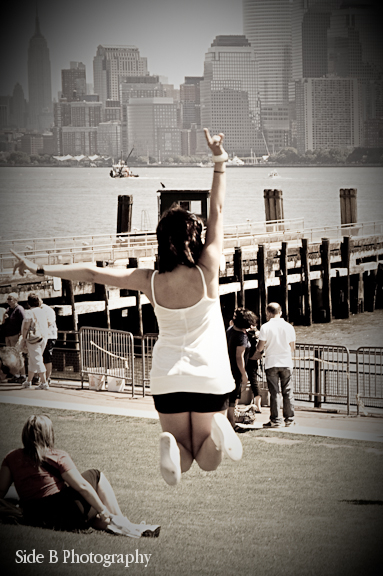
Photo Fermata went shopping for a new outfit and is still trying on the new duds before settling on the layout. Thanks to Valya for helping me create one of my best images last year.
There are a few other minor changes to the blog look, but I think you can see the big changes at face value..
Language... has created the word "loneliness" to express the pain of being alone. And it has created the word "solitude" to express the glory of being alone. ~ Paul Tillich
On this date in 1553> Michael Servetus, who discovered the pulmonary circulation of blood, is burned for heresy in Switzerland. History Channel "This Day in History" update.
It is scary how people are still so afraid of science and what we are learning from it. I am not proclaiming against any one faith. I wish though we could be a bit more open minded. I guess that is what separates the "elitists" from the others, openness to being wrong and learning more.
I guess for many ignorance is bliss and dogma is absolute.
I've been blathering a bit too much and producing too little. One of my former bosses, Nancy, gave me some great advice on public speaking.
Be brilliant.
Be brief.
Be gone.
Follow those three simple rules in public speaking and the audience will love you. In honor of Nancy, here are a few pics. I am not sure this post hits the first goal, but the last two can be checked off.
I can't remember when I first heard the term air brush as part of photography. It may have been in reference to a movie poster or Playboy photo layout. The term had both positive and negative aspects, but either way it means it is moving toward a lie or a fiction.
Airbrushing has long been used to alter photographs in the pre-digital era. In skilled hands it can be used to help hide signs that an image has been extensively retouched or "doctored".
As a result of Stalin's purges, and later destalinization, many photographs of officials from the periods show extensive airbrushing, often entire people have been removed. The term "airbrushed out" has come to mean rewriting history to pretend that something was never there. In contemporary academic discourse, the process of removing components from an image is formally known as object removal.
The term "airbrushed" or "airbrushed photo" has also been used to describe glamour photos in which a model's imperfections have been removed, or in which their attributes have been enhanced. The term has often been applied in a pejorative manner to describe images of unrealistic female perfection and has been particularly common in reference to pictures in Playboy, and later Maxim. [Emphasis mine]
That last paragraph summarizes the yin\yang of this technique. Are we enhancing a photo or creating a lie, or both? It depends on the intent.
The term airbrushed has faded in recent years in favor of the terms photoshop or photoshopped.
The term originates from Adobe Photoshop, the image editor most commonly used by professionals for this purpose.
... photoshop is widely used as a verb, both colloquially and academically, to refer to retouching, compositing (or splicing), and color balancing carried out in the course of graphic design, commercial publishing, and image editing. - Wikipedia
As with airbrushing, photoshopping has both positive and negative connotations. I always hear references to it in class. "Oh, you can photoshop that out." "Did you photoshop that cloud?" "Her skin is so smooth. How much photoshopping did that take?"
I never learned the craft of air brushing. I am a novice in Photoshop. I am pretty proficient in Adobe Lightroom, which enables me to smooth skin, enhance clarity, and clone out imperfections. As I learned this application I had to set my personal aesthetic for the tool. Here are my rules.
I shall not remove or add objects. (Telephone poles, people, tattoos, furniture, etc.)
I will lightly touch up physical appearances. (Remove pimples, rashes and other temporary blemishes. Lighten eyes. If smoothing skin, very little correction, if at all)
I will play with saturation, color, contrast, etc as much as I want, but it will not be in a effort to cosmetically improve the subject. It is more for mood and message.
I have the right to break these rules, if, and only if, my intent is to create a fiction and note it in the artist statement for the piece or series. The further from the truth, the greater the need to acknowledge the alteration.
One models refused to work with me because I do not smooth skin. I do not hide age. I do not accentuate these things either, but if they are present, they will be in my photo. If a model can not accept their own "imperfections" then they should cover them with clothing, wear make up, or move on to another photographer. The only times I will do heavy skin modification is in relationship to rule number 4 OR if the model or a client is paying me to take these photos and need a certain look. In that case, they get the look they want.
Why am I a stickler on keeping it natural? I want the world to see the natural beauty of humans, buildings, nature, etc.. If we can't acknowledge our wrinkles, acne scars (I've got them), TB shot scars, and other "imperfections" then we have little right to criticize the mass advertising world for doing the same in fashion/glamor photos. We are all vane and want to look our best. If you want to look your best, either hire me and direct me or move on to a photographer who will give you the photoshop botox you feel you need. If I am creating the image for me and my art, you need to be comfortable in your own skin. You already live in it.
I need to tip-toe around this topic since some of the parties involved may read this. I recently heard of a photo project that some acquaintances completed. A few of the key people in it knew I had a strong history with very similar projects, especially with this subject, material and theme. I know they've seen my work and it is as good as the stuff I've seen from the project. For some reason though no one thought to tell me about it or ask me to join.
At first I was furious. How dare they do something they know I have done in the past and have very strong work to contribute. Are they running a good old boys/girls club on this? Did I alienate myself from their group? How could they forget me?
After stewing on this perceived slight, I went to the final meeting of my NYC travel group to choose the final photos for our book and exhibition/gallery showing. We each put up our top two or three dozen images and had to narrow it down to six for the book and three for the exhibit (the book and exhibit could overlap). I had four themes for my photos, Sex in the City, On the Sidewalks, In the Museums, and The Usual Suspects (The usual sights of the city.) Our instructor, Ron, facilitated the redaction exercise. We went as a group and chose the final six and three for each person. The individual photographer had a major say concerning his/her own choices, but we had to look at it as a complete book of 16 photographers and how all the photos would work together.
We came to my images second and they were ruthless. Ron and others were saying things like:
"This one doesn't interest me. "
"Cliche."
"No point to this photo"
"This doesn't say anything about NYC."
I got quiet and softly said, "Ouch." Ron then said, "Look, we want the best book we can make. The critique and selection process is hard, but that is how it is. If you ever hear art and photo directors for magazines and books during their selection process, it is ruthless. If you are looking at getting an MFA, you had better get used to this type of moment, because it will be 100 times tougher and happen all the time."
We got down to my final six images. I was hurt that a few others were not selected, but see how these six work together and were actually some of my favorites from the beginning. It hurt, but it worked. From that moment on though, I chose to be ruthless in my opinions of the others' work if I felt it did not live up to what should be their six best. It's strictly business getting the best book. It isn't personal.
In that instant, I learned two things that lead to a tie-in to the original issue.
Redaction is crucial. Only the best should be shown.
If I am going to go into this for a new career, I need to get a thicker skin and be able to defend my work better when presenting it.
Movie Videos & Movie Scenes at MOVIECLIPS.com
After thinking about those two lessons, I looked at our group photo from the trip taken with the great photographer Duane Michals and I remembered his wise words.
Nobody really gives a fuck about you, it is up to you to make your art important.
This quote truly applies to the art world and business. No one gives a fuck about me, my work, and how I feel about it. We wanted the best book. The images chosen from my group may not be all my best, but they work best for the book.
The same goes true for the acquaintance who did not bother to ask me to participate in her project. In all likelihood, she forgot about me or if she had thought of me, I didn't have the cache, history, portfolio, and prior body of work to part of her project. It probably was business on that decision, and personal friendships should not have any part of business. She and her peers are not in business to do me a favor unless I can offer them something back of value as well. In other words, they really don't give a fuck about me.
Now what I have to figure out is how I can be included in the next project and find out why I wasn't considered for this one. From that I will learn and be ready for future opportunities. It may not be with them, and it may be a better one.
Don't go against your intuition.
I had obviously chosen the final 6 photos as part of the larger group I presented. Some part of me told me to include them and the rational part of me knew that any 6 could have been chosen. The final 6 are good and I am proud of them. My intuition was right.
My intuition about my work that is very similar, and probably in the same league or better than the stuff I've seen in the project I was not included in tells me they missed an opportunity for some great stuff of mine. That is my fault for not putting myself out their more, not theirs. In a way, it is their loss, but not really. My work is probably meant to be somewhere else and they got what they wanted.
I know what is good of my work. Nobody else gives a fuck about it or me, unless I get out there with it and force them to look at it. Most will say no. A few will say yes. The important thing to remember is: It's not personal, [Karl]. It's strictly business. That is how I will view your role with my work as well. You are just business when it comes to my art.
Two choices in life - doing it or becoming bullshit.
That pretty much sums up the other two quotes. I just have to do it. Everything else is bullshit.
SPECIAL NOTE: Thanks to Ron and crew for the great trip, experiences and for the creative project. We created some good stuff. By the way, I do give a fuck about your stuff.
"I've found artists are lousy at self promotion, monetizing and maximizing earning."* - Jim
Last night I had dinner with my best friend, Jim. Jim is a web design/internet marketing consultant and content producer. He mainly helps entrepreneurs build their web presence by creating effective and eye catching sites that help the consumer discover their services and products. His goal is to help each client find at least a 10 fold increase in revenue over the cost of his services. Jim is an ethical business man who wants entrepreneurs to succeed.
We were chatting about my websites that I need built for my photography. We came up with the fact that I need two sites, tied together. One will be my portfolio site that I can give to potential galleries, magazines, contests, etc. The other is a commercial site promoting my future photography courses, photo books, photo contract work, and other services and merchandise. I may even need a third one for my adult content (not porn, just not appropriate for the youngin's).
Jim asked me a while back to send him links to websites of other photographers that I really liked. I told him how I liked the clean, simple, elegance common in all of them. I don't want the formatting and graphic design parts competing at all with photos and words. He felt that was really helpful, but then he asked the hard questions, "Who are your buyers, customers, consumers, clients, etc.? What do you have to sell to them?" These questions that makes it hard for this artist to self-promote, monetize, and maximize earnings.
I've been thinking about these questions a bit now. Who would buy what I create? What would they buy of my creations? With those two simple questions I've come up with a list of potential things I can offer and who would buy them. This is important so we can point our advertising to those narrow groups to maximize revenue from advertising with out sending out spam for unwanted stuff and wasting effort and resources for those limited gains.
Here are a couple of tidbits I discovered from talking this through with Jim. Very few art buyers, if any, will buy my photography, especially the nude art, and hang it on their walls. As much as I love seeing my work big and on a good wall, society isn't ready to have those photos hanging in their homes. My photos are also not the type that make for good subscription-based websites. I don't produce enough content fast enough to do that, and to be honest, while I want some of my photos to arouse and excite, it is not for the quick masturbatory relief that subscription sites aim towards (not a judgment on those sites, I think they are helping the environment by reducing the amount of paper going into Hustler, Barely Legal, and other stroker mags.)
For now, I am exploring where my work can be exhibited/published to get to an audience and make me some scratch from it. I have some ideas, but they are not ready to share.
It is hard for artists to self-promote because many of us create art for ourselves and then hope some audience will come to us wanting it. That doesn't work unless you are extremely lucky and good. We are in the age where artists must promote themselves and be willing to sell both their art and themselves as a branded product. I am coming to accept this as not selling out, as long as I keep to my artistic morals, aesthetics and ethics. Now comes the next challenge, what the hell is my brand????
*This quote may be off a bit due to the influences of enjoying a cold beer, good Italian food, great company and eating outside of a restaurant on the first warm summer evening in northern California. I think that is the gist of it though.
Money - Pink Floyd - The backup singers at 7:00 minutes are priceless and damn sexy.
Ansel Adams had Moonrise over Hernandez. Edward Weston had Pepper Number 30. Richard Avedon had Dovima with Elephants. Orson Wells had Citizen Kane. I have Yin and Yang. I do not list these giant's iconic photos and movie and my work as being on par in quality and beauty, but to share what they may all have in common. For most viewers they are the single piece of art everyone identifies with their creator.
The one you posted here is one of my all-time favorites of yours. I like the yin-yang of it, and the beauty of the alabaster bodies against the black. Stunning and somehow pleasing to the psyche.
Others have written:
stunning b&w. love the emotions - Drusilla Killswitch @ Model Mayhem
This is one of the greatest shots I have seen on MM - Digiphotoarte @ Model Mayhem
One even wrote a poem for the photo and posted it as part of their critique.
A snowflake
on midnight's window
spirals around my centre
stirs the vortex of my desire.
Wonderful entwining of human forms here - love how one body merges into the other in Geminesque balance. - Jac at Photosig.com
I appreciate all of the comments and compliments of this photo. This is a special image for me and I am proud of it. When Leila, Hana and I created it in 2004, I was standing on a ladder above them as they lay on a black rug. As with almost all of my photos, I spent little time staging since I am not too particular with every detail meeting some predefined concept in my head. This moment and the pose lasted one or two photos before the models moved a bit to a new pose. The whole thing took maybe forty seconds. I mention this because part of the success of the image was serendipity.
Dovima with Elephants - Richard Avedon
Yin and Yang has a rich aesthetic beauty for me. As UL wrote, "Stunning and somehow pleasing to the psyche." I agree and I like that description. It is a relaxing piece to look at, but does it have much more than that?
I believe Yin and Yang lacks complex meaning. I have many other photos I think are more important including some recent work from New York, Nevada, and Rome. They make me stop and think. I want to explore them and discern what they mean to me as the creator of them and also who I am. I seek the deeper meaning with them as they get under my skin and make me think. Yin and Yang does not do that for me as either a creator or a viewer of it.
Maybe I have to accept Yin and Yang, and how it reflects on me, in two different ways. First, not all of my art has to be about something. It doesn't have to carve deep into my psyche and share truths about existential issues. Yin and Yang can exist to simply celebrate beauty and aesthetic. Second, even with its success I have not pigeon-holed my art into making all my images like it. I am not Anne Geddes. While I have pride in that photo, I am free to make what I want and not be limited to cloning prior success. I have to remember Walker Evans may be remembered for his Share Cropper photo series, but my favorite photos of his came from his late-in-life experiments with Polaroid cameras.
Dennis Hopper (l ) Peter Fonda (r) Movie Sill from Easy Rider
Dennis Hopper died a couple of weeks ago from cancer. He was 74. The first time I saw Dennis Hopper was while watching the movie he directed and acted in, Easy Rider. Even though many liked Peter Fonda's character, I always understood and related to Hopper's character better. Hopper was a great photographer and artist in multiple genres. Maybe his broad creation and appreciation for art is one of the reasons I am saddened by his passing.
Hopper was not a perfect man. He had drug and alcohol addictions, anger problems, was micro-managerial over artistic vision, was obstinate, opinionated, and an egotist. He burned bridges and almost destroyed his career multiple times in multiple ways. Through it all, he lived his life with a need to escape being ordinary. His path may not have always been true, fruitful, or even that good artistically, but he was willing to reinvent himself and go about his life in another direction. I respect that brave sense of self-renewal.
"Drugs can work for you, but at one point you work for them." - Dennis Hopper
Paul Newman - Dennis Hopper
Hopper attended the Actor's Studio with all the other great method actors of his time. It is amazing how I can watch a movie staring him or other *Actor's Studio alumni and see a depth to their craft that many current movie stars lack. Hopper had this depth of talent as well. Whether he was playing a biker seeking freedom in Easy Rider, an avenging, homicidal bomb-making ex-cop (Speed), or a stoned reporter in Vietnam (Apocalypse Now), he always had a unique edge and depth that made you want to learn more about his character.
Much of Hopper's early acting craft came from working with James Dean on Rebel without a Cause. In a 1990 interview** with Hopper, he shared that Dean told him with acting, "Do things. Don't act like you are having a drink, have a drink. Don't indicate, react. If in the part you are supposed to open the door and someone is there with a gun, react to the gun like you didn't know it was there. The moment is the reality. Never anticipate what the next moment will hold."
"Photography is not like painting," Henri Cartier-Bresson told the Washington Post in 1957. "There is a creative fraction of a second when you are taking a picture. Your eye must see a composition or an expression that life itself offers you, and you must know with intuition when to click the camera. That is the moment the photographer is creative," he said. "Oop! The Moment! Once you miss it, it is gone forever. " -Wikipedia (emphasis by me)
As a photographer, Hopper appreciated Henri Cartier Bresson's concept of the Decisive Moment. Look at Hopper's photo, Biker Couple. In that one instant, he captured all the youth and disillusionment in those two and their relationship. When watching his acting, you can tell that he was living as that character at that moment. In each moment, his character "... never anticpate(d) what the next moment (would) hold."
Biker Couple - 1961 Dennis Hopper
This is a key element of both his and my art. The moment is the reality, even if we are creating it. We create and capture the decisive moment when we trip the camera's shutter. Life went on before that moment and continued after, but something made us need to capture that moment.
I've written before about the fermata, a controlled pause in music, In photography, all that is important is what is photographed in that fraction of a second. Nothing else matters except what we saw and knew to be the defining or decisive moment we just captured.
Dennis Hopper understood the value of the moment, whether in a role, painting, or photo. In many ways he lived his life that way too. The moment was where he lived. Thanks for sharing it with us.
Great quote from Easy Rider that summed up the whole point of the movie.
"It's not who you boys are or what you look like, it's what you represent that scares these people." George, played by Jack Nicholson - Easy Rider
Below are a few references, photo essays, video clips, and deeper reads. I recommend them all. Slate/Magnum Photos
One important note about these videos from Easy Rider. Hopper was one of the first directors to use complete contemporary songs as a part of the movie and then match the scene cuts to the music. He attributes this style to what he saw on TV commercials. Maybe this was a forefather to music videos? Hopper thought so.
I grew up in the south central part of the state in Billings. Billings had all three of these historical events happen in close proximity to it. Custer and his cavalry were wiped out about 50 miles to the southeast. Chief Joseph and his tribe had a minor skirmish near the town of Laurel, about 20 miles west. William Clark, Sacagawea, and a portion of the Corp of Discovery came down the Yellowstone River that flows along the south side of the city on their way back east.
Of all three, I’ve studied the Lewis and Clark expedition the most and feel a deep sense of pride of living in the area they explored. Their mission was to explore the Louisiana Purchase and find a Northwest water passage from the Mississippi to the Pacific Ocean. While everyone on the entire trip is worth learning about, my hero of the expedition was Sacagawea and I want to write about her today.
Sacagawea was a Shoshone woman who was kidnapped as a child by the Sioux Indians. When she was a young teenager, a French trapper named Charbonneau won her in a game of chance. By the time she was fifteen, she had married him and was pregnant when they met Lewis and Clark in current North Dakota during the first winter of their expedition.
Lewis and Clark hired Charbonneau as a guide for the next year’s trek to the Pacific. Charbonneau was a lousy guide and worthless to the expedition. Sacagawea became a leader, guide, naturalist, interpreter and many-time savior of the expedition while taking care of her newborn son.
One of Sacagawea’s first heroic actions was when she calmly rescued the provisions, scientific equipment, journals and other essential items that had fallen into the Missouri River after her husband’s boat had tipped. Without her quiet determination, much of the important information of the trip would have floated away.
The expedition met other Indian tribes along the trail. Almost all of these interactions were peaceful due to the fact that the local tribes felt the group must be peaceful since they brought a woman along and that she was the interpreter.
While every day was part of the soap opera, the story grew more and more intense as they tried to find a water way over the Rocky Mountains of current Montana. They kept going up the Missouri to its headwaters and then up the rivers that joined to create that river at current Three Forks. They were running out of summer days and knew the winter snows were coming soon. If they did not get over the mountains before the snow fell, they would have to survive the winter in Montana. They did not have the provisions, lodging or other key items to do it though.
At the most desperate moment when they were at the end of the one of the tributaries, they saw some Shoshone braves on a hill. The braves reluctantly invited the explorers back to their camp. As the expedition and the tribal leaders sat around a fire, Lewis and Clark tried requesting help getting more supplies and information about getting over the mountains. Even with Sacagawea’s interpretive help, things weren’t going well.
At one point, Sacagawea became quiet, started shaking and crying as she looked at the Shoshone chief Cameahwait. She suddenly sprang up, calling his name, hugging him and crying. He looked at her and started crying and hugging her. She had found her brother… the only surviving member of her family from the time she was kidnapped.
With that warm bond restored, the Shoshone offered horses, supplies and a guide for trade to help them get over the mountains. Due to this help, the expedition barely made it to the Pacific before winter.
Now is that the ultimate soap opera moment or what? All was about to be lost and through the love of brother and sister reunited, all was saved. Every time I think of that moment, I imagine being there and witnessing how the moment changed history in the instant.
Sacagawea helped the expedition the whole way. While Lewis and Clark loved and respected her and often treated her as an equal, it was not easy for the fifteen year old woman. At the end of the trip, she and Charbonneau were released from their contract. Sadly, she died almost a decade later.
The location of the family reunion is now under the Clark Reservoir in southwestern Montana. I drove by it on Sunday and remembered the history lesson this place held. Never underestimate the importance of anyone. She or he may become the most important person instantly.
Who gets to write or create other forms of art outside of their own demographic groups? Can I write a story about a woman, or an Asian immigrant, or a any other person other than a white male?
A dozen years ago my wife and I read She's Come Undone by Wally Lamb. It is a first-person story of woman from childhood through mid-life. My wife asked, "Why do male authors writing through a female character always focus so much on their period?"
I thought about it and offered up that men often process visual and physical information and the period is a physical female characteristic. It is also something we have no first-hand knowledge about so it is a curiosity we want to explore through writing. These authors often go into detail about the physical manifestations of female arousal as well by including descriptions of wetness and nipple hardness. I am guessing it is again the physical things we see, but have not experienced. Few male authors go into the feelings behind these physical items and events.
My wife responded that focusing on these events from a man's view lowers the credibility of the author's writing and character development. I agreed.
Kathryn Stockett's book, The Help, takes place in the South during the civil rights movement. Many of the characters are black housemaids and domestic servants. Most critics and readers praise the book, but some feel that a white woman can not and should not write in and for the voice of the black woman since she is not of that background and is at best waxing nostalgic and worst writing in a condescending or patronizing way about these issues.
"Bigelow handles this grim subject matter with a woman's sensitivity and attention to the smallest details. The story is told by the images - a fly on the eyelashes of a sniper, the defiant faces of people in the street, a peddler of pornographic DVDs set up in a marketplace next to a butcher displaying sides of meat, bright wires spread out like a spiderweb to a ring of deadly explosives. "
and
"I will argue that only a woman's eye could have given us this film"
I've read criticism of The Hurt Locker from ordinance disposal veterans and soldiers stating the themes were sensationalized, hokey, preachy, or off mark. Some of these criticisms may stem from having to make an entertaining movie and some due to the political views and focus of the director and story. Should a woman tell the story of men in war? If yes, why is that acceptable?
So, with all of these opinions and criticisms, when is it acceptable to write or create art in a non-native voice? Even if the quality of the product is lauded, some may feel it is not right since the creator can not correctly produce work since she/he is not part of that community.
I find this challenge to acceptance very challenging in my art due to being a white male. When I tried to create something from a different voice, I received the criticism listed above. When I created something from my own voice that has erotic or nude content, I've been challenged that my work exhibits the (white) male's gaze. It is part of the dominant culture's work, so it is not new and perpetuate white male dominance in culture or even repress the voices and objectify other groups.
LH - 040810 -BW
In a recent discussion/portfolio review, a female artist showed her work consisting of an erotic nature. Some of her work was similar to mine and other male photographers work I've seen. I showed some of my photos of Candace and received reviews and criticism. I am open to how others view my work because art is a subjective personal experience. I appreciated the interpretations. I had to ask though, why is Victoria's photos of similar themes accepted differently than mine? The answer was because I am a man and my motivation and message was different than hers due to my gender (which I do not argue against). That is probably true, but why is my art criticized as being of less value? No direct answer was given, but being part of the dominant cultural voice (white male), my work is not innovative for my background and hers is.
Can I create art that comes from my artistic voice even though that voice is of an unpopular majority member? I was told if I continue with these streams of art during an MFA program, I would be challenged and have a difficult educational journey. I could create art with environmental, economic, bends with little problem since they tend to be gender/race free. I could try creating erotic art with a queer theme, but would be challenged since I am not gay. My acceptable themes appear to be much narrower than other groups' since the history of white men have spoken enough about them.
So what? Maybe it is time to create the "unacceptable." Isn't that part of the purpose of art is to push what is acceptable or even break it? If a woman wants to make a war movie, she should go for it and create the best she can. If I want to create art that is either outside of who I am or deeply inside my identity, I can do it because that is the art I need to make. It may not have an audience now, or never that appreciates it, but that is not my purpose for creating it. Sometimes art is naive and needs to grow up to be relevant. Sometimes it is the world that needs to grow up and stop limiting thoughts of old issues in order to appreciate the art.
Welcome Mission of this new(ish) blog:
I strive to be the artist I am. This blog is one of my outlets to share my thoughts, creations, fears, education and stories of making art. It may be selfish, but this is my blog to help me become a better artist and I hope you will find something of value along the way.
The shift from the S7S.
I think the old blog was getting a bit stale and had lost its focus. I rambled about whatever and not as much about what was important to my art. I wrote about my sexual longing and issues, art, work, my truck, politics and everything that popped into my head. This blog may have some of that, but not as much. It is time to move on and not dwell on so many things I can not change or am too lazy to try.
The Fermata Symbol
Photo Fermata
Deja vu, momentary lapse, tuning out, zoning out, in the zone. We all feel life pause or hold onto the second we are in longer than usual.
When I played in symphonies and bands, the fermata would make us stop going on in the music and continue playing the note we were on. When we saw the note with the fermata above it, we would look up to the director and watch him or her for the signal to stop that note and continue onto the next note in the original tempo. We were told that the fermata's duration was at the discretion of the director as to shape the music. We could not stop the fermata. If the conductor keeled over, the note would go on. That is the control of the conductor at that moment.
Many other groups of musicians play fermatas. Have you ever watched a jazz or rock band hold a note until one of the musicians makes a movement and the either they go on or they end the song? That is a fermata.
Every photo is a fermata. For the duration of the shutter, every bit of information carried into the camera through light particles freezes into a solitary moment on the film or sensor. Sometimes the subject is frozen in place and other times it appears as a motion blur. The image though captures all that as if it was time put on hold. Even though a fast moving subject may be frozen in time, the viewer knows that it was moving and continued moving after photo was taken, just like music.
Blue Angel 5 600+mph
Photo by Karl
The earliest experience most of us have with the photo fermata is when the school portrait photographer said told us to look at the camera and say "cheeeeeeeeese." Each of those photos is us holding that "eeeeeeee" sound for the length of time the photographer felt was needed to get the correct exposure.
Fire Dancer - Burning Man
As a photographer, and a begrudging subject/model, I've grown to know the roles in the art. The model and subject fill the screen with what is needed. All the roles are crucial to the success of the photo, but it is the photographer who decides how to take the photo. *To paraphrase Richard Avedon when talking about the model/photographer/subject, "You are very important and I could not do this with out you, but I am in control."
I think all art is about control - the encounter between control and the uncontrollable. - Richard Avedon
My photographic artistic purpose then is to make that held moment important enough to capture and share. It may only be important to me, but that is important enough to take it. This blog is dedicated to those captured visual holds or fermatas.
Special thanks to my blog world friends for your support during the remodel. A special nod to Joe and his blog, Improvisations, for giving me the idea of connecting music to photography.